
The Supercar
السيارة الخارقة
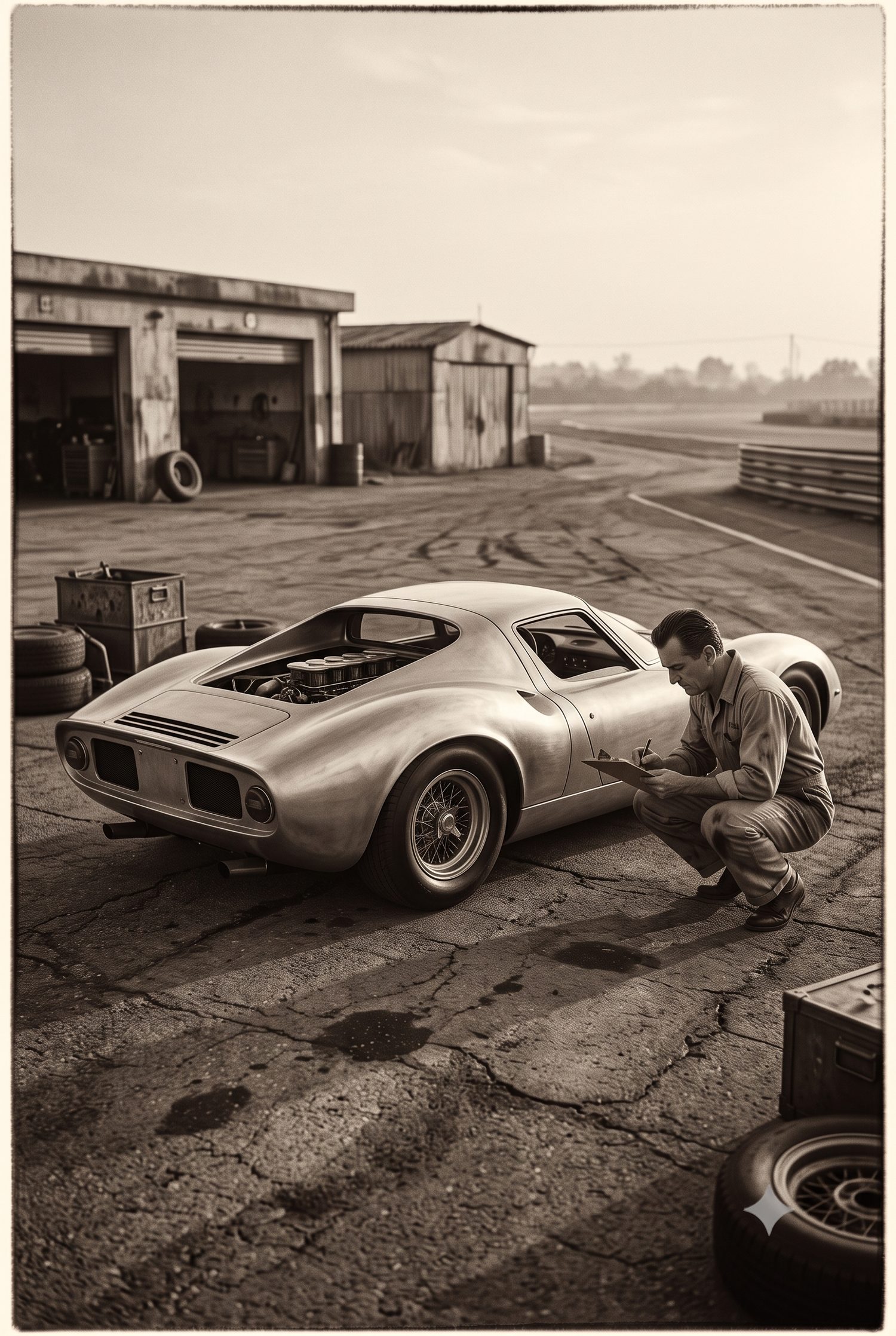
By placing the engine behind the driver, the Lamborghini Miura fused physics and beauty into a single silhouette and created a new category: the supercar. Engineering and art were no longer in tension — they had become the same pursuit.
Unveiled as a bare chassis at Turin in 1965 and complete at Geneva in 1966, the Lamborghini Miura placed a 3.9-litre V12 sideways behind the driver — a configuration borrowed from the racetrack and never before sold for the road. Marcello Gandini’s body, drawn at Bertone, remains one of the most beautiful shapes ever pressed in steel.
At close to two hundred and eighty kilometres an hour it was the fastest production car of its day, and it gave the world a new word: the supercar. Every mid-engined marque since — the shape, the drama, the placement of the engine — descends from this one car.
بوضع المحرّك خلف السائق، مزجت لامبورغيني ميورا بين الفيزياء والجمال في صورةٍ واحدة، وابتكرت فئةً جديدة هي السيارة الخارقة. لم يعُد بين الهندسة والفنّ تعارض، بل صارا سعيًا واحدًا.
كُشف عنها هيكلًا عاريًا في تورينو عام ١٩٦٥، واكتملت في جنيف عام ١٩٦٦؛ وضعت لامبورغيني ميورا محرّك V12 سعة ٣٫٩ لتر عرضيًّا خلف السائق، في تخطيطٍ مستعارٍ من حلبات السباق لم يُبَع للطريق من قبل. ويظلّ هيكل مارتشيلو غانديني، المرسوم لدى بيرتوني، واحدًا من أجمل الأشكال التي صُبّت في الفولاذ.
وبسرعةٍ تقارب مئتين وثمانين كيلومترًا في الساعة، كانت أسرع سيارة إنتاجٍ في زمنها، ومنحت العالم كلمةً جديدة: السيارة الخارقة. وكلّ علامةٍ متوسّطة المحرّك جاءت بعدها ـ في الشكل والوقع وموضع المحرّك ـ تنحدر من هذه السيارة.
- Car
- Lamborghini Miura P400
- Layout
- Transverse mid V12 · 3.9 L
- Top speed
- ~280 km/h
- Design
- Gandini · Bertone